Electrical faults are the ones most often fixed by replacing parts until the symptom goes away. We would rather find the cause. A battery that keeps going flat, a car that clicks and will not crank, lights that dim at idle: all of those have a specific reason, and the test that finds it takes less time than the second guess.
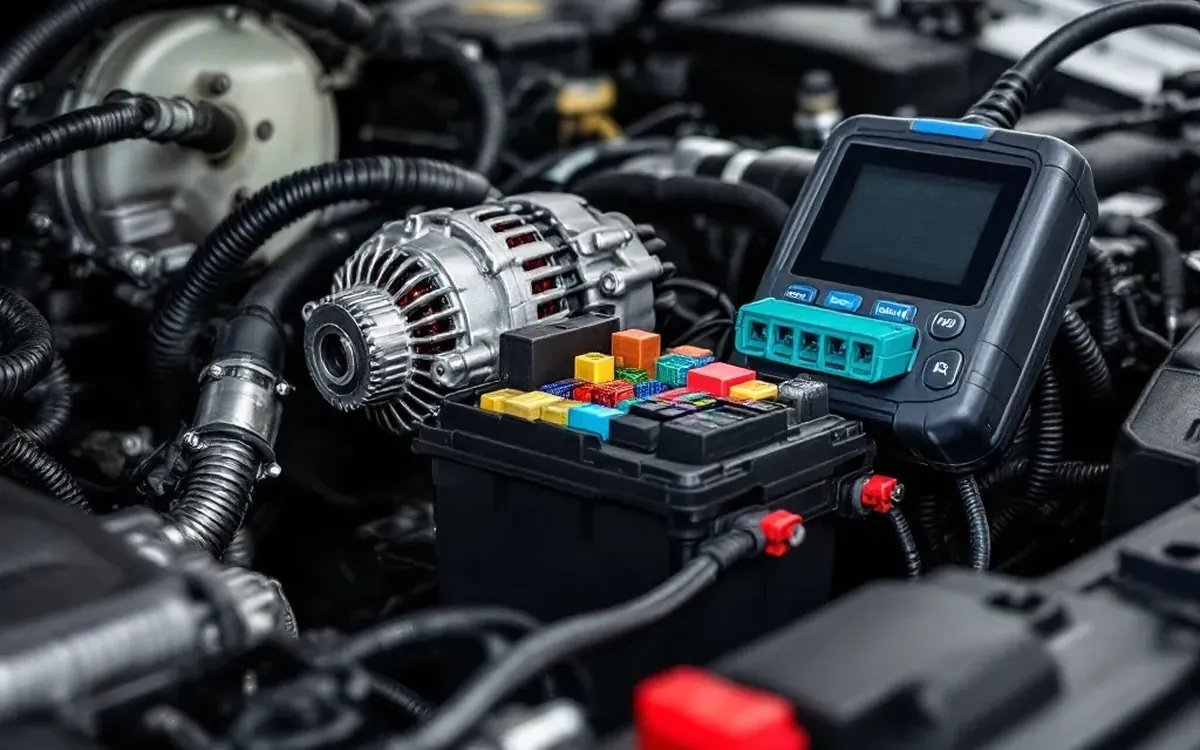
Battery load-tested, alternator output measured and the whole charging circuit checked, because a battery that keeps dying is usually the symptom rather than the fault.
Starter, solenoid, ignition switch and the heavy cables between them, tested under load rather than guessed at from the noise.
Headlights, tail and brake lights, turn signals, and the grounds, sockets and switches behind them that fail far more often than the bulbs do.
Chafed harnesses, corroded grounds and the slow current draw that flattens a healthy battery while the car sits.
Because the battery was probably never the fault. Either it is not being charged, which points at the alternator or its wiring, or something is drawing current while the car is parked. Both are measurable, and we measure them rather than fitting a third battery.
That is a test, not a judgement call. We check what the alternator is actually putting out and what state the battery is in, and tell you which one is at fault. Sometimes it is neither and the answer is a corroded cable.
Yes. Tracing a drain or a short is careful work rather than a parts swap, so we tell you up front roughly what the diagnosis will take before we start it.
Three to five years is normal, and a Michigan winter shortens it at both ends: cold cranking is hard on a battery, and short winter trips never fully put back what starting the car took out. A battery does not have to be dead to be failing, which is why we load-test it instead of reading the date on the label.
One loud click is usually the starter solenoid pulling in without enough current behind it. Rapid clicking is almost always a flat or failing battery. Both are cheap to measure and expensive to guess at, so we check the voltage drop across the cables before anybody buys a starter.
Walk-ins welcome six days a week. The inspection is free whether or not you have the work done.