
The catalytic converter is the most expensive part in your exhaust system and the one most often replaced when it did not need to be. That is not usually anybody being dishonest. It is that a very common trouble code has the word "catalyst" in it, and it gets read as a diagnosis when it is not one.
The short version
A P0420 code says the oxygen sensors before and after the converter are reading too much alike. Four different things cause that, and only one of them is a dead converter. Test first.
What it actually does
Inside the converter is a ceramic honeycomb coated with platinum, palladium and rhodium. Exhaust gas passes through it hot, and the coating drives chemical reactions that turn carbon monoxide, unburned fuel and nitrogen oxides into carbon dioxide, water and nitrogen.
Two things follow from that. It needs to be hot to work, which is why a car doing nothing but short trips is hard on one. And it is a filter for the engine's mistakes, which is why an engine running badly destroys converters rather than the other way around.
The code that starts most of these conversations
There is an oxygen sensor before the converter and another after it. The first sees the raw exhaust; the second sees what comes out. When the converter is working, those two readings look very different. When they start looking alike, the computer sets P0420, catalyst efficiency below threshold.
That is a symptom, not a part number. Four things produce it:
The converter really has failed. It happens, particularly on high-mileage cars.
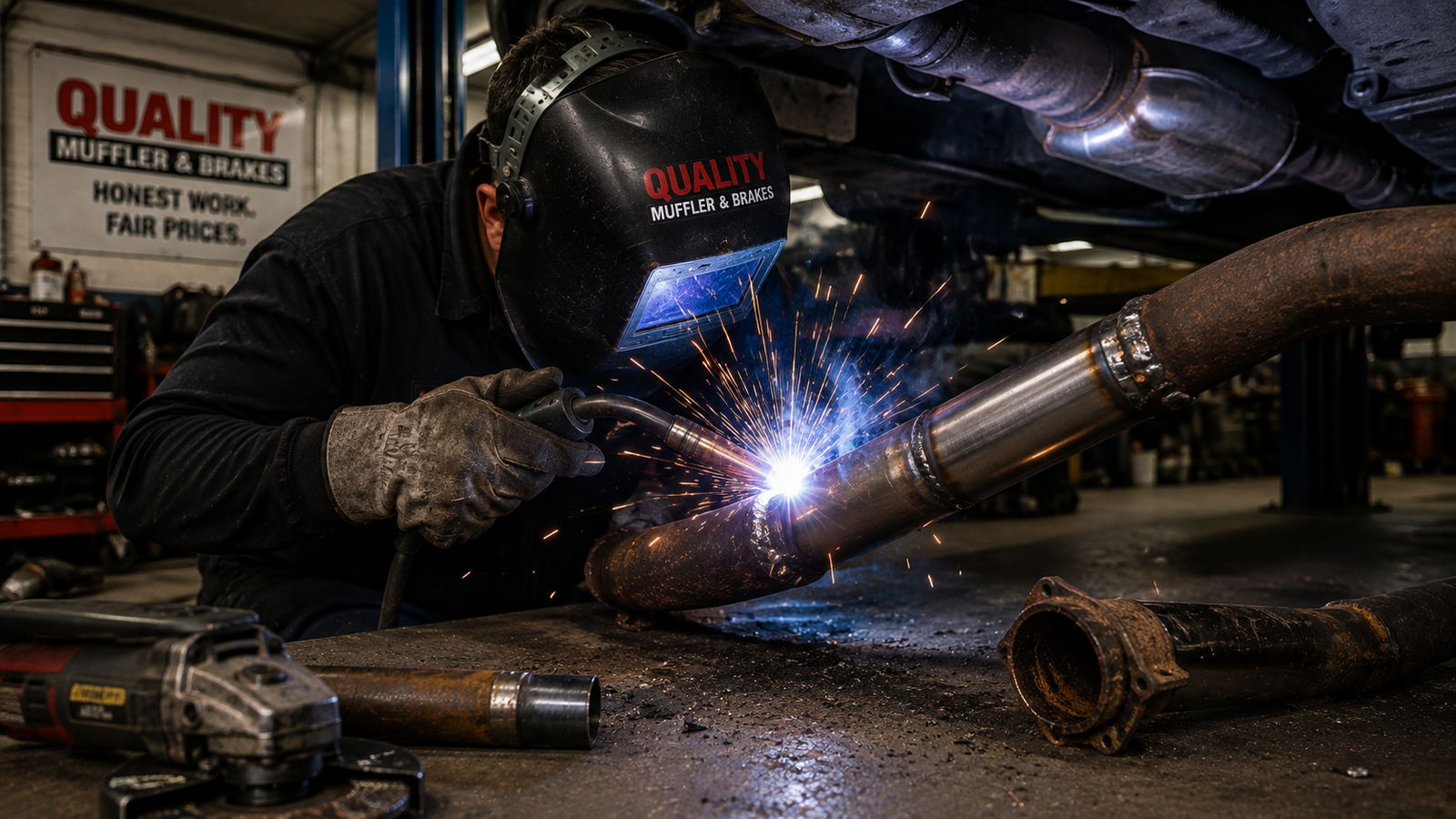
An exhaust leak between the two sensors. A pinhole or a cracked joint draws fresh air in, the rear sensor reads oxygen that is not from the converter, and the numbers converge. Extremely common in a salt state, and this is the one we find most, because rusted exhaust here is the norm rather than the exception. Our guide to what rots first explains why.
A lazy or failed rear oxygen sensor. A sensor that has slowed down with age reports something close enough to the front one to trip the threshold.
An engine problem feeding the converter what it cannot process. A misfire, an over-rich mixture, oil or coolant getting into the exhaust. This is the important one, because if that is the cause and only the converter is replaced, the new converter will die of exactly the same thing.
Which is why the sequence matters: check for leaks, check the sensors, check how the engine is actually running, and then, if everything else is right and the code stays, the converter is the answer. That is what our diagnostics work is for.
What a genuinely failed converter feels like
- A noticeable loss of power, worst under load or going uphill, as a collapsed honeycomb restricts flow
- A rotten-egg or sulfur smell from the exhaust
- A rattle from the middle of the car, which is broken ceramic loose inside the housing
- Fuel economy dropping without another explanation
- A P0420 that comes straight back after everything else has been ruled out and repaired
Notice that most of those have other causes too. That is not us hedging, it is the actual situation, and it is why anybody who quotes you a converter over the phone is guessing with your money.
What kills them early
Converters do not usually die of old age. They are killed, and knowing by what is how you avoid buying two.
A misfire. Unburned fuel goes down the exhaust and ignites inside the converter, which can melt the honeycomb in minutes. This is exactly why a flashing check engine light means stop driving: it is the one dashboard warning where finishing your journey can cost you the most expensive part in the system.
Oil or coolant burning. Worn valve seals, worn rings or a head gasket leak coat the catalyst and poison it.
Running rich for a long time. A leaking injector or a failed sensor sends more fuel than the engine can burn, and the converter takes the rest.
Short trips, for years. A converter that never fully reaches temperature does not burn off its own deposits.
If yours was stolen
Converter theft is a real problem here and the diagnosis is unmistakable. The car was quiet yesterday and today it is extremely loud from the moment it starts, with none of the gradual worsening a rusted exhaust gives you. Look under the middle of the car and you will see a gap with two clean cut ends.
Three practical things. Call your insurer before the shop, because it is usually a comprehensive claim and they may have a process. Do not keep driving it any longer than you have to, because unmetered exhaust can damage the oxygen sensors and leave you with a second bill. And when it is replaced, ask about a shield or a cable cage, which is straightforward to fabricate at a shop that welds and makes the car a slower target than the next one.
Why we will not quote one over the phone
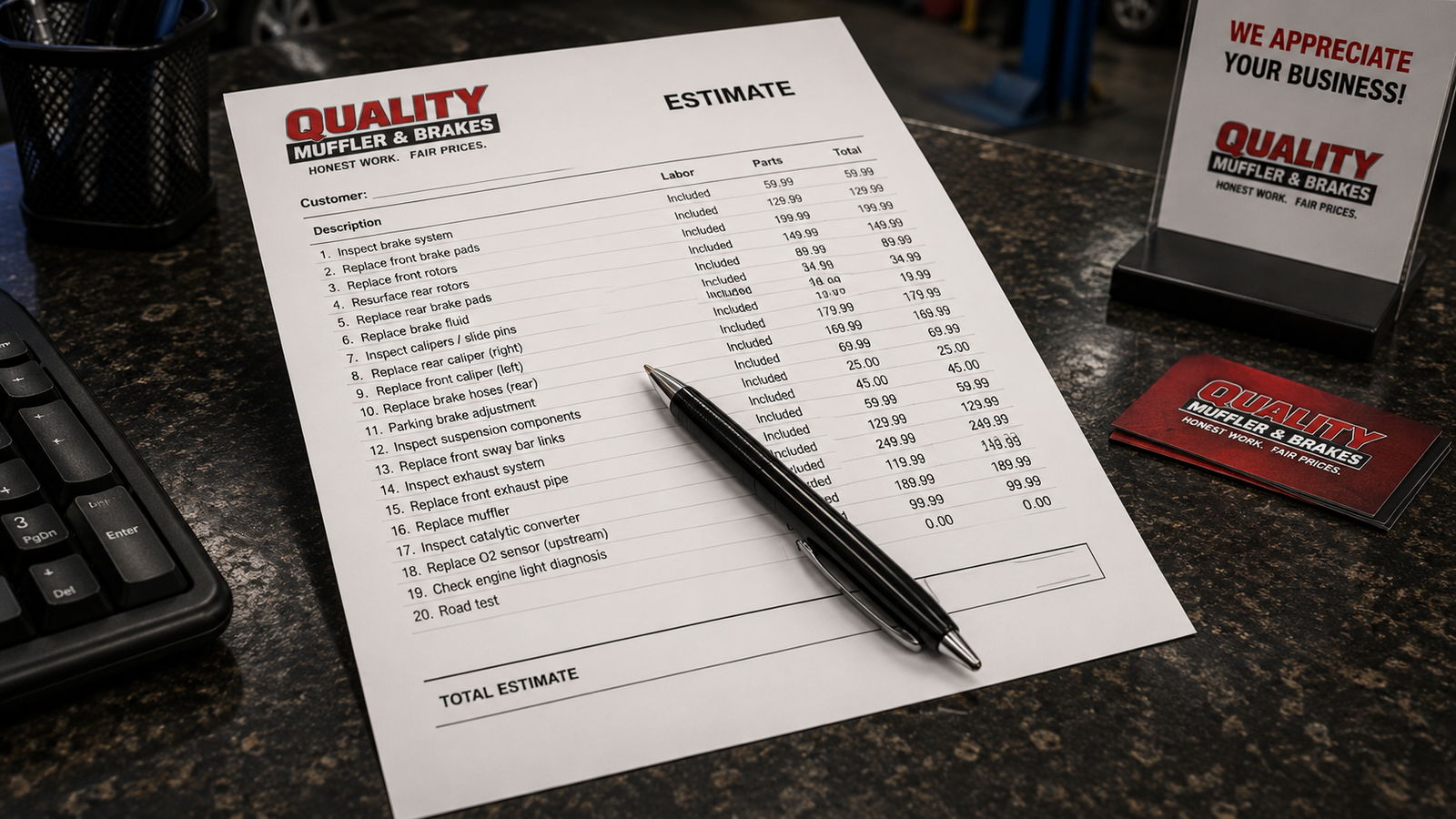
Converters vary enormously in price between vehicles, and beyond that the honest answer depends on what is actually wrong. If the code is coming from a rusted joint upstream, the repair is a weld and a fraction of the cost. If the rear sensor is lazy, it is a sensor. If the converter genuinely has failed, it is the converter, and you should know that before you pay for one rather than after.
We put the car on a lift, check for leaks, look at what the sensors are actually doing, and tell you which of the four it is. The inspection is free. There is more on how a repair figure gets built in what a repair actually costs.
Getting it checked properly
Bring the car in with the code still stored, and please do not clear it first: the freeze-frame data that comes with it is often the most useful thing we have. Walk-ins welcome six days a week at 14646 Fenkell Ave, west of Greenfield, close to Brightmoor, Grandmont Rosedale and Redford Township. Hours and directions are on the contact page.