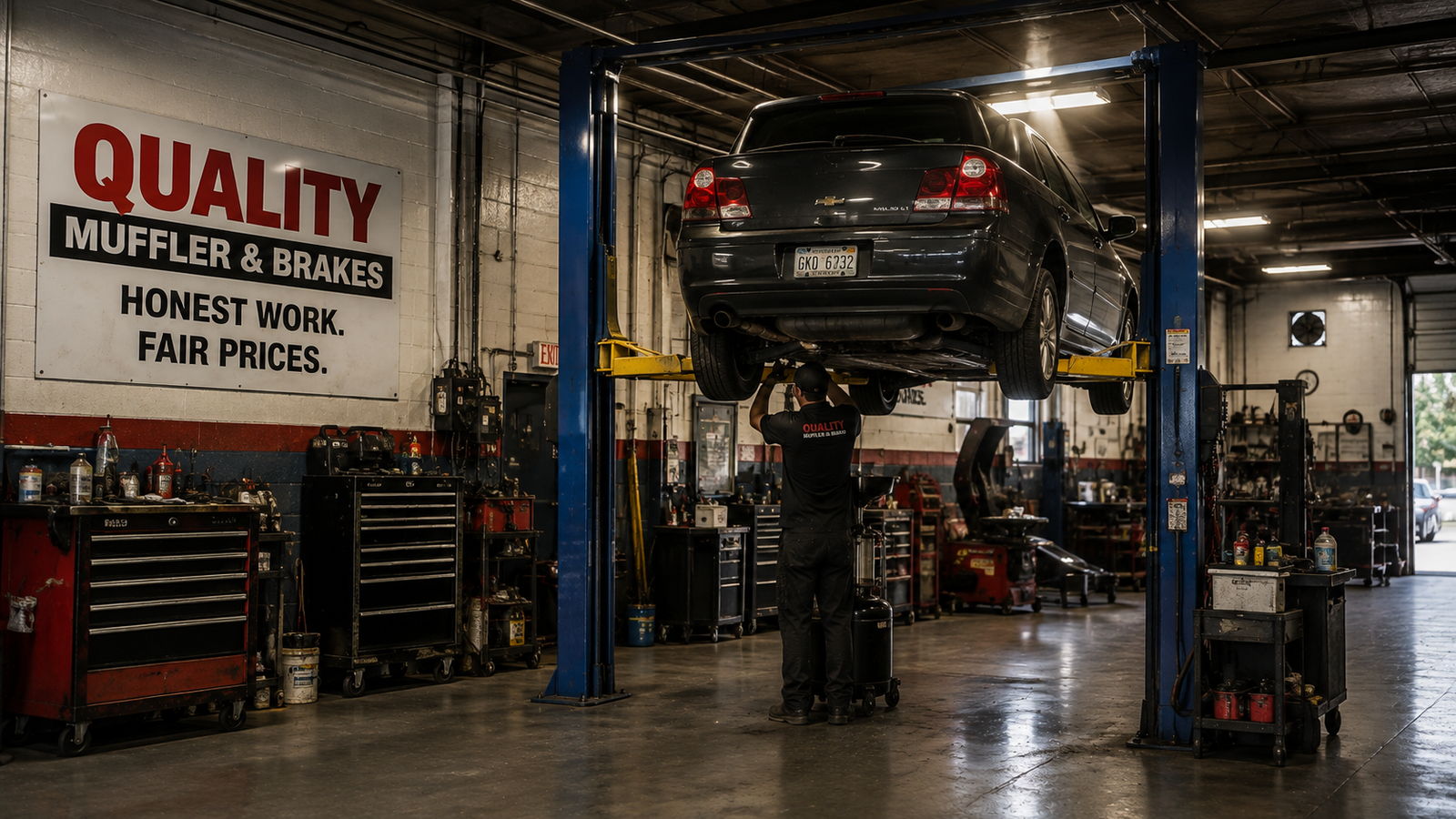

Every driver asks the same thing first, and most shops answer it badly. Either they refuse to say anything at all, or they give a number on the phone that turns into a different number at pickup. Both are ways of avoiding the same fact: the price of a repair depends on things nobody can see until the car is on a lift.
So rather than post a figure that would be wrong for most of the cars that come in, here is the thing that is actually useful, which is how the number gets built in the first place.
Three things set the price
Parts, and which tier of them. A brake pad is not one product. There is a budget pad, a mid-range ceramic, and a premium set with the hardware and lubricant in the box, and they are not the same part at three prices, they are three different parts with different lifespans and different noise behavior. A shop that quotes you the cheapest without telling you which tier it is has not saved you money, it has moved the cost forward eighteen months.
Labor, measured in book time. The industry works from published labor guides that say how long a given job takes on a given vehicle. Front pads and rotors on a common sedan might be an hour; the same job on a vehicle where the caliper carrier has to come off and the parking brake is electronically retracted can be two or more. That is not the shop deciding to charge you more. It is the car.
What is seized, rusted or already broken. This is the one nobody can price over the phone, and in Michigan it is the one that moves the number most. A bleeder screw that snaps, a caliper slide pin corroded solid, an exhaust bolt that shears off in the manifold: each of those turns a routine job into a longer one. We cannot know until we are under there. What we can do is find it before we quote, rather than after.
Why the same job is two different jobs
Take the most common repair we do. Two cars come in with grinding front brakes.
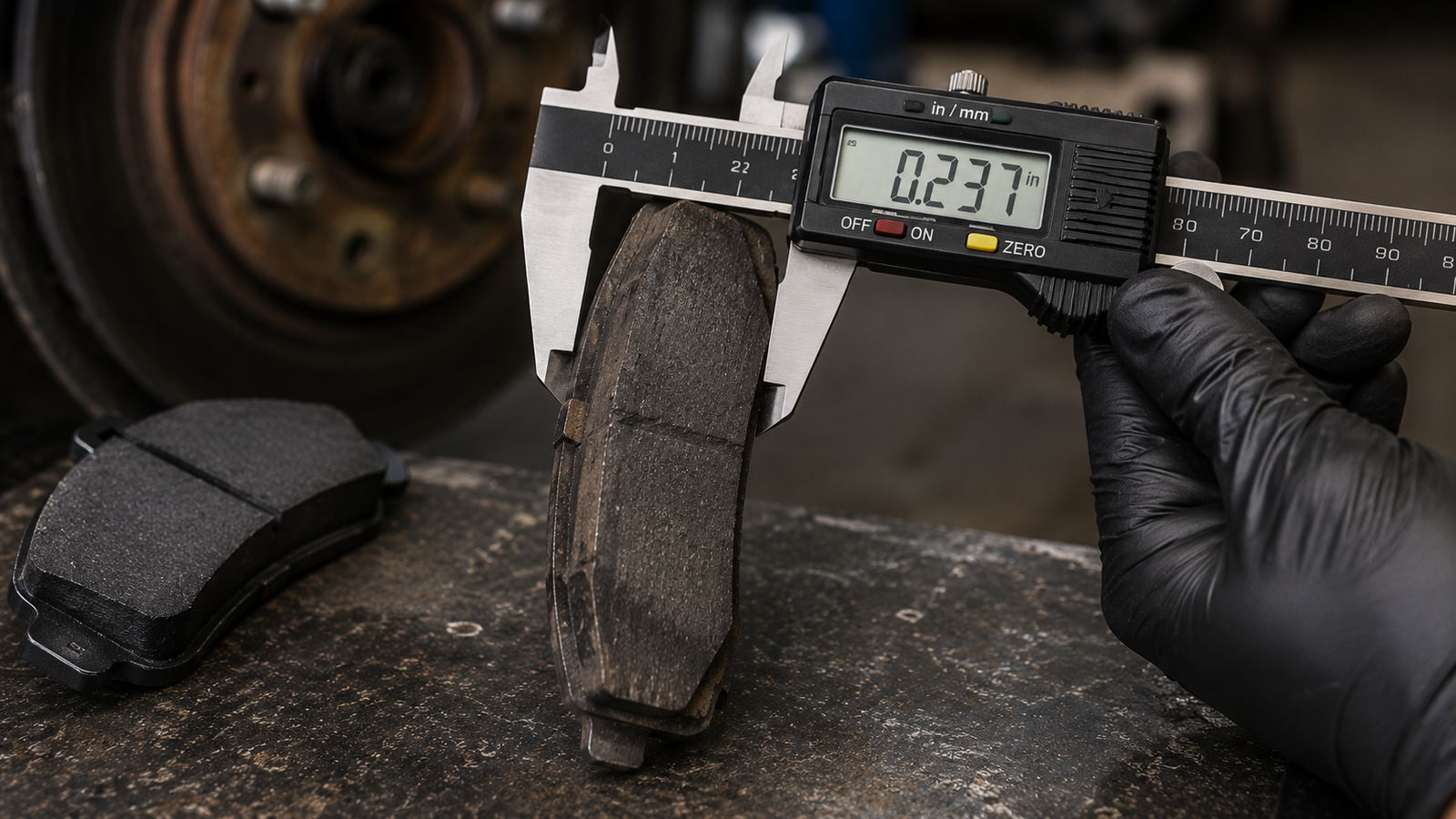
The first is a five-year-old sedan. The pads are gone, the rotors measure above the minimum stamped on them and are running true, the calipers move freely. That is a pad set, new hardware and lubricant, an hour of labor.
The second is a twelve-year-old truck that has spent every winter on salted roads. The pads are gone, the rotors are below minimum and scored, one caliper is dragging because the slide pins have corroded, and the flex hose is swollen. That is pads, rotors, a caliper, a hose and a bleed, and several times the labor.
Both drivers asked "how much for front brakes". A shop that gives one answer to both is going to be wrong for one of them, and it is not going to be wrong in your favor.
What a real estimate has to contain
An estimate that is just a total is not an estimate, it is a number. Ask for these, in writing, before anything is touched:
- Each part named, with the tier or brand, priced separately
- Labor listed separately from parts, with the hours shown
- Any shop supplies, disposal or environmental fees stated rather than appearing later
- Taxes shown
- Anything found but not being done today, listed and priced, so you can plan for it
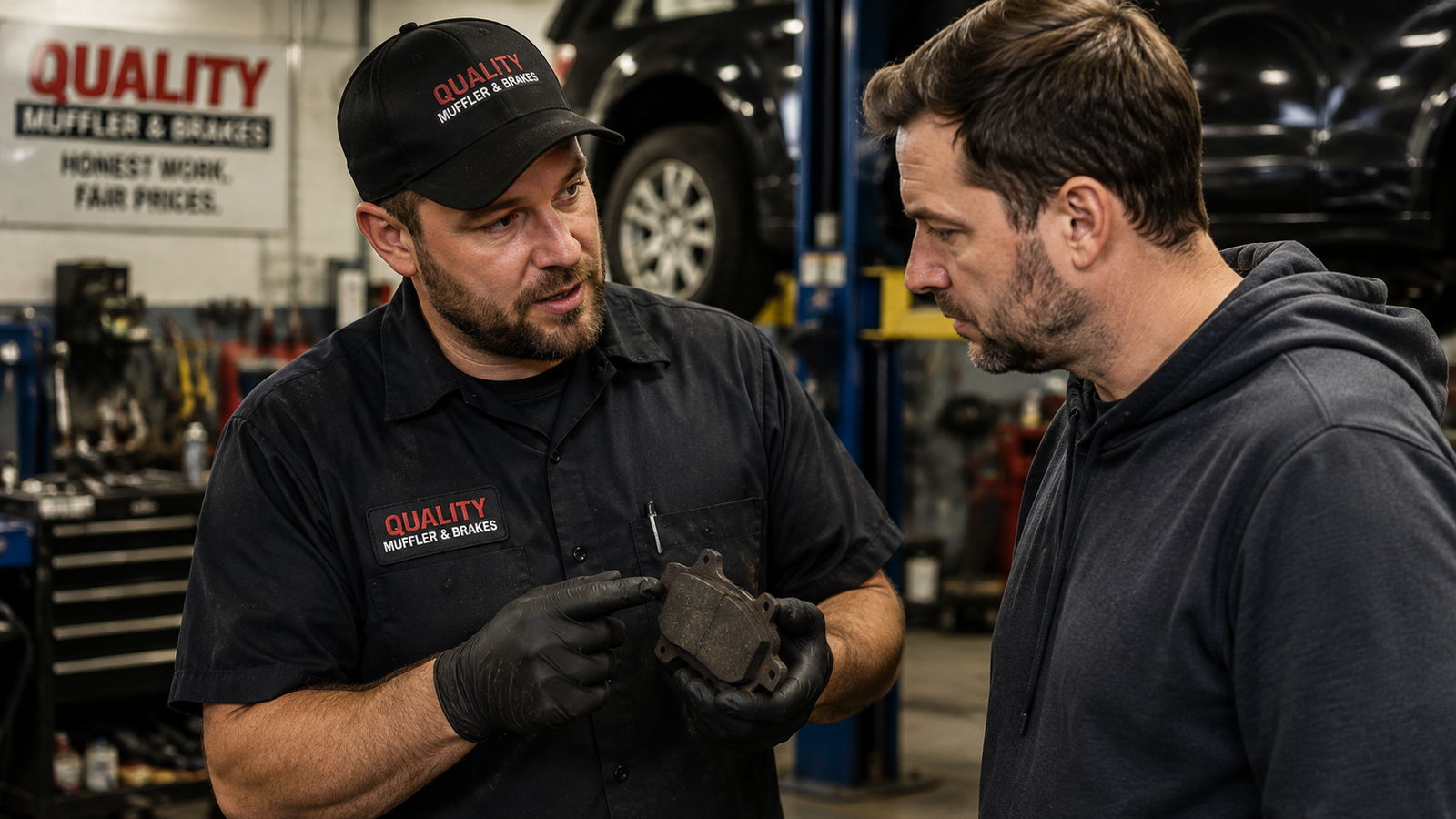
That last line matters more than people expect. A shop that tells you "your rear pads have about six months left, we are not doing them today" is telling you something useful and giving up the chance to sell it to you right now. That is the behavior you are looking for.
How to compare two quotes without getting it wrong
The cheaper quote is not automatically the cheaper repair, and this is where most people lose money.
Put the two side by side and check whether they contain the same work. Does one include rotors and the other only pads? Does one include new hardware and lubricant, or is it reusing the clips? Does one include a fluid service the other skips? Is the labor the same number of hours? Is the part the same tier?
Nine times out of ten the difference between two brake quotes is not the shop's margin. It is scope. And when the cheap one wins because it left the rotors on a car that needed them, you buy the job twice.
The one thing worth being genuinely suspicious of is a quote given confidently over the phone before anybody looked at the car. It is either a guess, or it is a hook.
Diagnostic time is not a repair
Some faults announce themselves. A grinding brake takes one look. Others, particularly electrical faults, a parasitic battery drain or an intermittent check engine light, take real time to trace, and that time is a service in itself.
Our multi-point inspection is free on every car that goes on the lift, and it stays free whether or not you have the work done. A full diagnostic, the kind where somebody is testing circuits rather than reading a code off a scanner, is charged for and then applied toward the repair if you go ahead. That is the honest structure. A shop that says all diagnosis is free is either not doing much diagnosis or is recovering the time somewhere else in the bill. Our diagnostics page spells out where that line sits.
The Michigan tax on every repair
There is a real cost premium to repairing cars in a salt state, and it is worth naming because it explains a lot of estimates.
Fasteners seize. Brake lines corrode from the outside. Exhaust hangers rust through and take the pipe with them. Suspension bolts weld themselves into their bushings. On a ten-year-old car here, a job that is book-time elsewhere routinely takes longer, and occasionally a part that was fine gets damaged coming off something that was not.
Which is why the most cost-effective thing you can do in this climate has nothing to do with shopping around. It is having somebody look underneath once a year and catch the cheap version of the problem. An oil change with a real inspection is the usual way that happens, and a rusted hanger caught early is a fraction of the exhaust section it takes out later, as our guide to what rusts first explains.
When the number lands badly
Sometimes the honest quote is more than you have this week. That is a normal situation and it deserves a better answer than a shrug.
Tell us. There are usually three real options: do the safety-critical part now and the rest later, and we will tell you truthfully which is which; use the 101-day payment plan, which needs no credit and is approved at the counter while you wait; or leave it, with a clear-eyed conversation about what that means. The one thing we will not do is tell you a car is safe when it is not, or unsafe when it is.
Getting an actual number
Bring the car in. The inspection costs nothing, you get the measurements written down, and the figure you get is the figure. Walk-ins are welcome six days a week at 14646 Fenkell Ave, west of Greenfield, and drivers come to us from Redford Township, Livonia and Southfield. Hours and directions are on the contact page, and if you would rather write than call, the form there reaches us the same way.