
Almost nobody can evaluate a brake job by looking at it. So people judge the shop instead, and most of the signals they use, a clean waiting room, a confident manner, a low phone quote, are the easiest things in this business to fake.
Here is what actually separates a straight shop from a bad one, written by a shop that would rather be judged on this than on a star rating.
1. Ask for the number, not the adjective
This is the single best test and it takes one sentence.
"Getting low" is an adjective. "Three millimeters" is a number. Brake pads are measured in millimeters, tire tread in thirty-seconds of an inch, and rotors against a minimum thickness cast into the rotor itself. Those figures exist, they are not matters of opinion, and any shop that measured will tell you instantly.
A shop that only offers adjectives either did not measure or would rather you could not check. Ask on your next oil change, before anything is wrong, and you will learn more about the shop in ten seconds than in a year of reviews. Our guide to brake warning signs covers the two measurements that decide every brake job, so you know what to ask for.
2. Ask what happens if you leave it
"What happens if I do not do this today?"
The answer you want is specific and sometimes boring. "Those rear pads have maybe six months in them, do them next visit." "That hanger is not going to strand you, but it will take the pipe with it eventually." "This one I would not drive on."
A shop that answers everything with urgency is selling. A shop that will tell you something can wait is giving up revenue today to be believed later, which is exactly the trade you want them making.
3. Ask to see the old parts
Not because you will be able to assess them. Because a shop that expects the question behaves differently before it is asked.
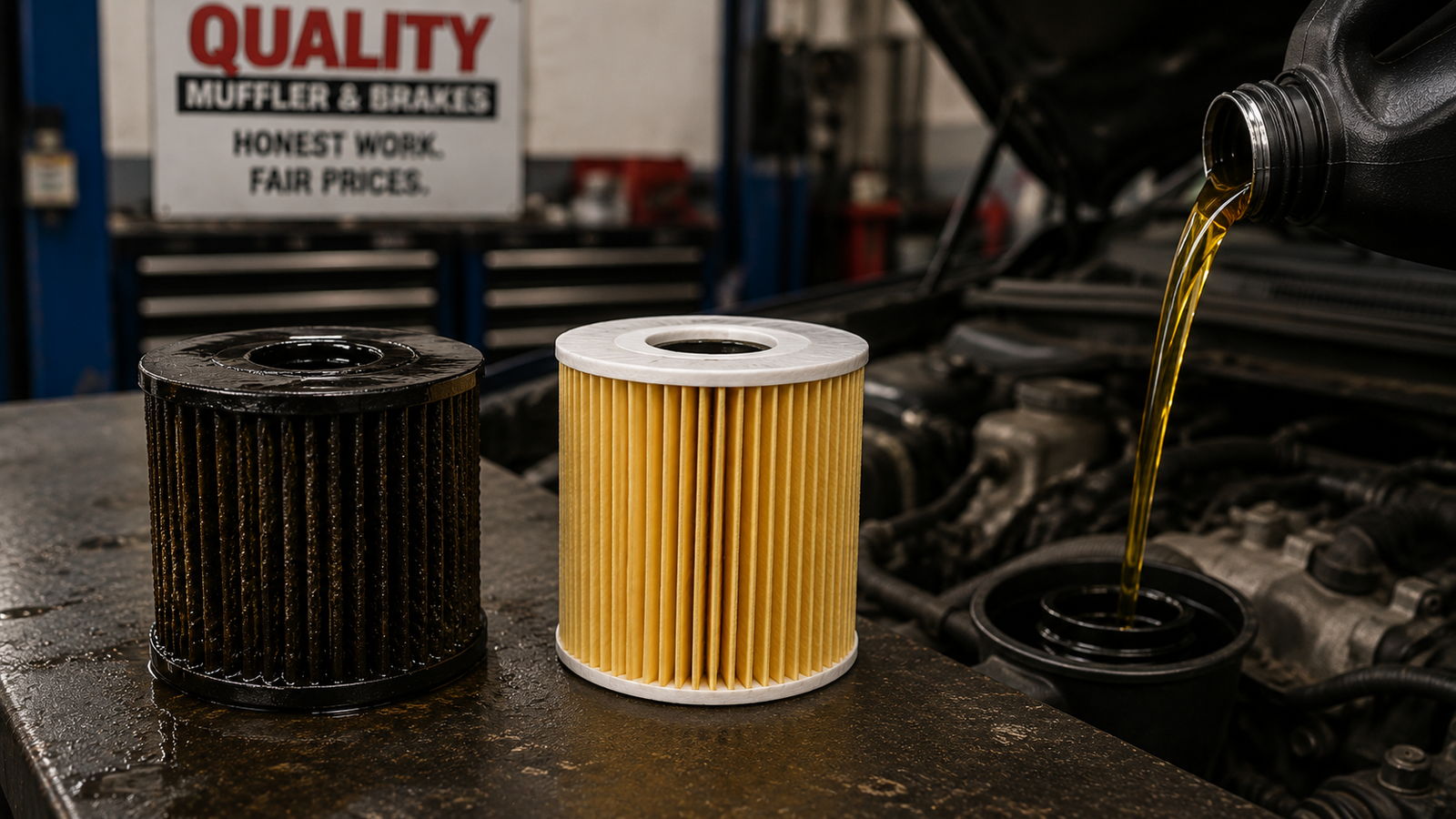
Old parts are yours. Any shop should set them aside if you ask when you approve the work, and being shown the worn part next to a new one is the most direct answer there is to "did I actually need that".
4. Get it in writing before, not after
A verbal figure is not an estimate. Before anything is touched you should have, on paper or on a screen you can photograph: each part named and priced, labor separately with the hours, any shop or disposal fees, taxes, and a line for anything found but not being done today.
Then one more question: "If you find something else once it is apart, what happens?" The right answer is that the work stops and you get a call. Not that they carry on and it appears on the bill.
5. Be careful with a confident phone quote
This one feels backwards, because a shop that answers the price question on the phone feels helpful and one that will not feels evasive.
But nobody can see a seized caliper, a scored rotor or a snapped bleeder over the phone, and in a salt state those are the things that move the number most. A firm figure given before anybody looked at the car is either a guess or a hook to get the car onto the lift, at which point the real number appears.
What a shop can honestly tell you on the phone is what your symptom usually turns out to be, what the job normally involves, and roughly how long it takes. We wrote out how the number actually gets built here: what a repair actually costs.
Reading reviews properly
The star average is the least useful part of a review page. Read the words instead, and look for three things.
Specificity. Reviews that name the repair, the vehicle and what happened are worth ten that say "great service".
What the negative ones say. Every shop that has been open for years has some. What matters is the pattern. Complaints about a wait are a different business from complaints about surprise charges or work that had to be done twice.
How the shop responds. A defensive or absent response to a fair complaint tells you what happens when something goes wrong with your car.
Ours are on the homepage, in the customers' own words, each one linked back to the review it came from so you can check it rather than take our word for it.
When two quotes are hundreds apart
Before assuming one shop is gouging you, check whether they quoted the same job. Does one include rotors and the other only pads? New hardware and lubricant, or reusing the clips? A fluid service? The same tier of part? The same labor hours?
Most large gaps between honest shops are scope, not margin. And the cheap quote that left the rotors on a car that needed them is the expensive one, you just pay for it later.
Things that should make you pause
- Work started before you approved a written figure
- A price that changed at pickup with no phone call in between
- Being told everything is urgent, every visit
- Reluctance to show you a part or a measurement
- A discount that only exists if you decide right now
- A confident quote before anybody has seen the car
What we would want you to check about us
We would rather be measured against this list than talk about ourselves, so here is where we stand on it. The multi-point inspection is free on every car that goes on the lift and stays free whether or not you have the work done. The measurements are written down and you keep them. The quote is firm and in writing before anything is touched, and anything found mid-repair is quoted and approved by phone first. Old parts are yours on request. If a repair can wait, we will tell you, and if the total lands badly there is a 101-day payment plan that needs no credit.
Test it on something small. An oil change costs little and puts a shop through most of the list above.
Come and check
We are at 14646 Fenkell Ave, west of Greenfield, walk-ins welcome six days a week, with drivers coming to us from Redford Township, Brightmoor and Grandmont Rosedale. There is more about how we work on the about page, and hours and directions are on the contact page.