
A car in Michigan does not wear out evenly. Salt, cold starts and the freeze-thaw cycle attack specific parts in a fairly predictable order, and almost everything on that list is cheap to catch early and genuinely expensive to catch late.
Here is what actually happens under there, and the short list of things worth doing before the first hard freeze.
If you only do one thing
Get the underside looked at in October. Every item below is visible to somebody with a light and a lift, and every one of them costs a fraction in autumn of what it costs in February.
What salt goes after, in order
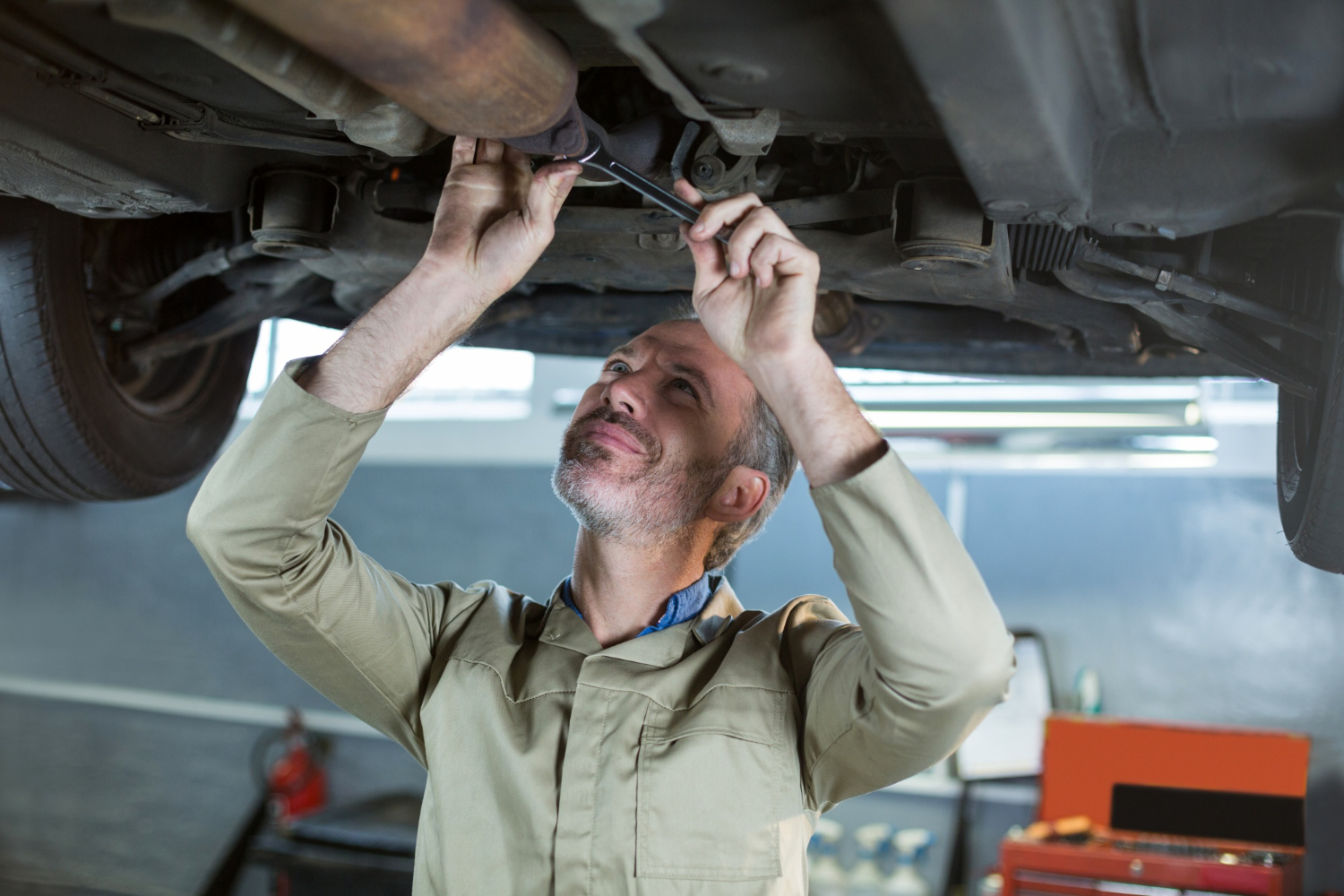
Brake lines. Steel lines run the length of the car, low down, right where the spray is. They corrode from the outside in, and the failure mode is not gradual: a line that looks scaly holds pressure until the day it does not, and then the pedal goes to the floor. This is the single most important reason to have somebody look underneath in a salt state, and it is a five-minute inspection.
Exhaust hangers and clamps. Rubber isolators perish, their steel hooks rust through, and a section starts moving in a way it was never designed to. That movement is what cracks the pipe further along. A hanger is one of the cheapest repairs on a car and replacing one on time genuinely prevents a much larger bill, which our guide to what rots first goes into properly.
Caliper slide pins. Salt gets into the boots, the pins corrode, and the caliper stops releasing cleanly. The car pulls under braking, that corner runs hot, and it eats its own pads and rotor. Often you can smell it after a drive.
Fuel and brake line fittings, and the parking brake cables. The same story in miniature, at every joint.
Body seams and subframe. The slowest of the five and the one you can see, usually starting at the rear wheel arches and rocker panels. By the time it is visible from outside it has been happening underneath for a while.
The coldest thirty seconds of the year
A large share of an engine's lifetime wear happens in the first half-minute after a cold start, and the colder it is, the more true that gets.
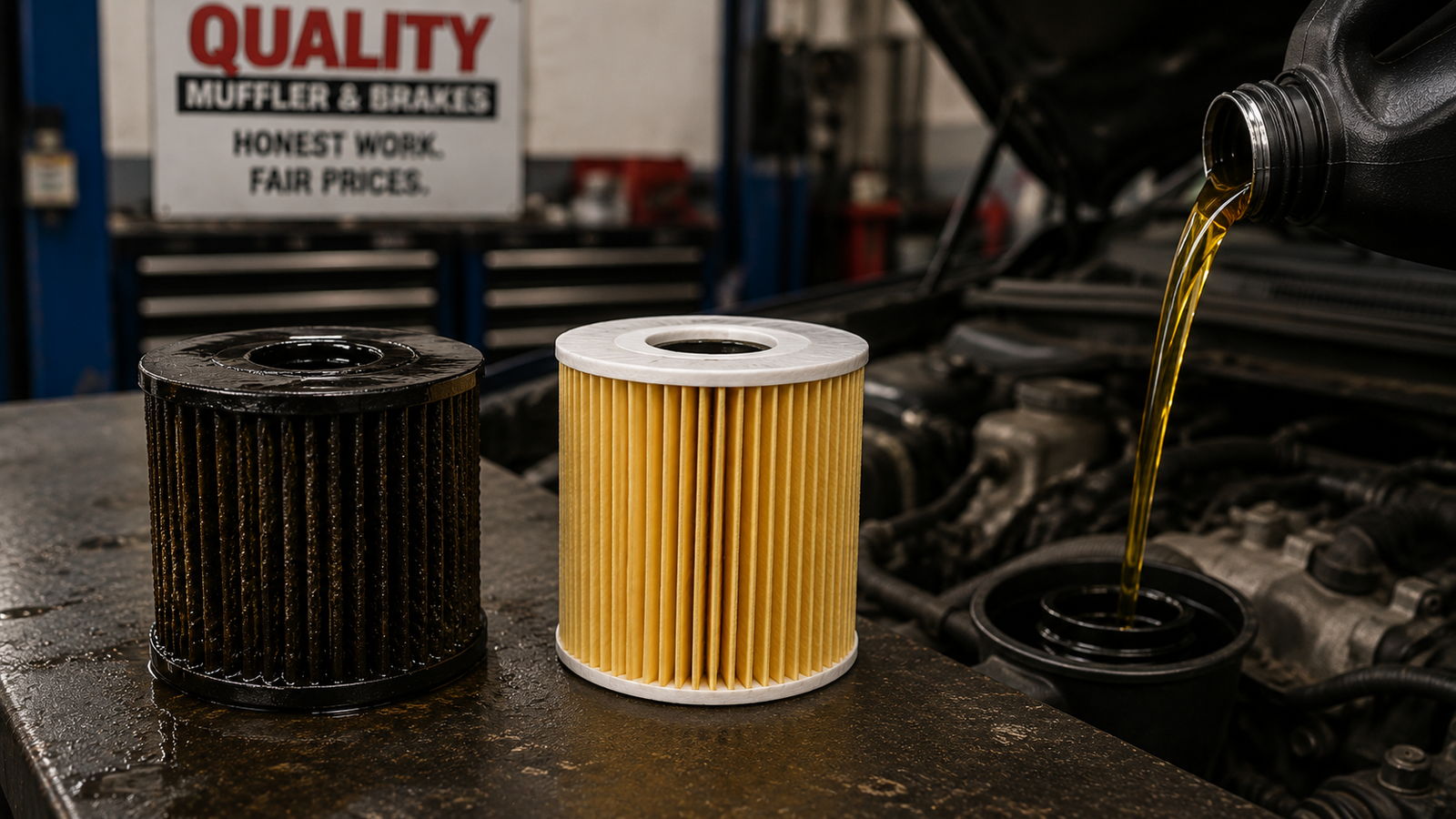
Cold oil is thicker. It takes longer to reach the top of the engine, and until it does, parts are running with less of a film between them than they were designed for. That is why the winter grade in your manual matters. The number before the W in 5W-30 describes cold flow, and putting a heavier oil in a car that calls for 0W-20 to quiet a tick delays oil getting where it needs to be at exactly the wrong moment. There is more on that in what an oil change actually buys you.
The other winter engine problem is one almost nobody connects: short trips. Combustion produces water, and on a short run the engine never gets hot enough for long enough to boil it out of the oil. In winter that gets worse, because the engine takes longer to warm up and the trips do not get any longer. If your driving is a couple of miles at a time, you are on the severe-service schedule whether or not your mileage says so.
Warming it up
Thirty seconds to a minute, then drive gently. Long idling does not warm a modern engine any faster than driving does, and it puts more fuel past the rings while the oil is still cold. The heater will get warm sooner if you drive, too.
Why batteries die in January and not in July
Cold does two things at once, and they work against each other.
It reduces the current a battery can deliver, because the chemistry slows down. And it thickens the oil the starter motor has to turn the engine through. So the engine asks for more current at the exact moment the battery can supply less.
That is why a battery that was slightly weak in October is a no-start in January. It did not fail overnight, it was already marginal and the cold exposed it. A load test takes minutes and is worth doing before the season, not after the tow. If yours has been jump-started more than once, that is a charging system question rather than just a battery one, because something is either not charging it or draining it.
The October list
- Brake lines, fuel lines and the underbody inspected properly, on a lift, with a light
- Battery load-tested and the terminals cleaned
- Pad thickness and tread depth measured and written down
- Coolant tested for freeze protection, not just topped up
- Wipers replaced if they are smearing, and washer fluid swapped for a winter mix
- Exhaust hangers and heat shields checked, since these are what rattle first
- Tire pressures set, remembering that they drop with the temperature
That list is exactly what a multi-point inspection covers, and ours is free on any car that goes on the lift, whether or not you have any of the work done.
Tire pressure and the light that comes on every autumn
Air contracts as it cools. A tire set correctly in September will read a few PSI low on the first properly cold morning, which is why so many tire pressure lights come on in the same week every year.
It is usually not a leak. Set them cold, to the figure on the door jamb sticker rather than the number on the tire sidewall, and check again after the first freeze. Underinflated tires wear their shoulders, handle worse on ice and cost fuel, so it is worth the two minutes.
What a spring wash is actually worth
Washing the underbody at the end of the season is genuinely useful, and it is worth being precise about why.
Salt keeps corroding for as long as it is sitting on the metal, and it is at its most active when it is wet. So rinsing the underside during a thaw, and again once the roads are clear in spring, removes the thing that is doing the damage. What it will not do is reverse corrosion that has already started, and no wash substitutes for somebody actually looking at the lines and hangers.
Booking the winter check
Come in during October and we will put it on a lift and go through the list. The inspection costs nothing, you get the measurements written down, and anything found gets quoted in writing before it is touched. If something needs doing and the timing is bad, the 101-day payment plan needs no credit.
We are at 14646 Fenkell Ave, west of Greenfield, walk-ins welcome six days a week, an easy run from Redford Township, Livonia and Old Redford. Hours and directions are on the contact page.